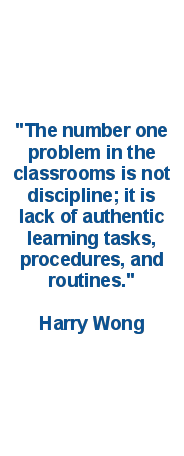
The first weeks of school is the most critical time for establishing effective classroom management for the rest of the year. I’m a big believer in holding off on all significant teaching of course content until some effective classroom management procedures and classroom rules are established and practiced thoroughly. Consider using the following classroom management…
The Religion Teacher Blog

3 Passive Learning Objectives That I Never Use
I’ve written often on this site and in my eBook about the importance of writing out learning objectives for your students. These learning objectives, or lesson objectives, set a goal for your students to reach during the course of the lesson. It allows you as a teacher to focus only on the teaching strategies and…
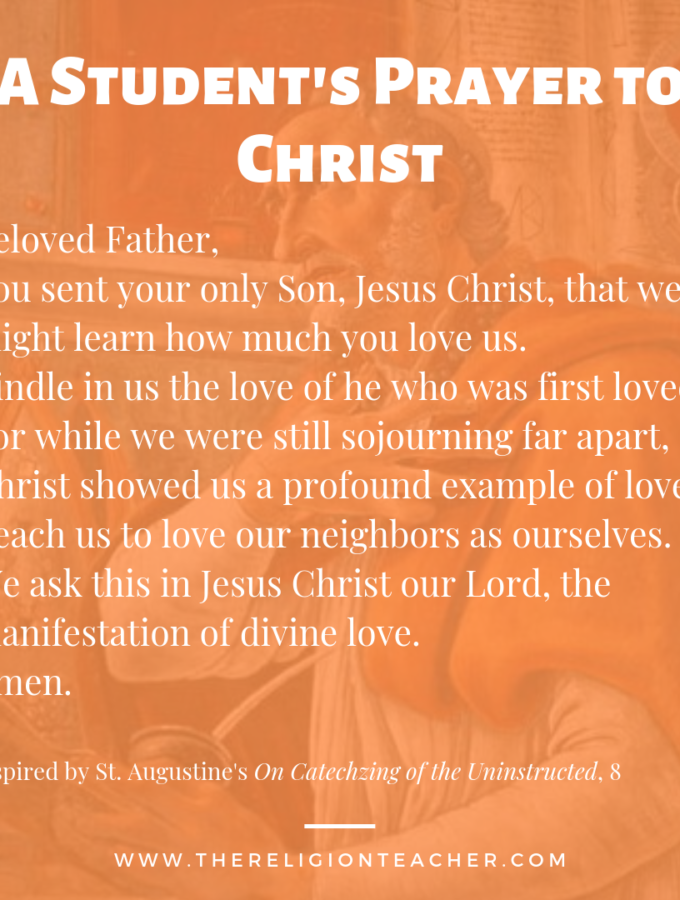
Saint Augustine Prayers for Catechists, Teachers, and Students
The following prayers of Saint Augustine are derived from a short piece of writing that was meant to instruct catechists about teaching. Although his intention was not to offer prayers for the use in catechesis, his hope was to inspire teachers to overcome their challenges and find inspiration in the love of God. The prayers…

Nickel and Dimed Discussion Questions
A popular book used in social justice courses is Nickel and Dimed: On (Not) Getting By in America by Barbara Ehrenreich. For schools who have assigned this book on the summer reading list or for an assignment during the year, consider integrating the Nickel and Dimed discussion questions that are offered below. For those who…
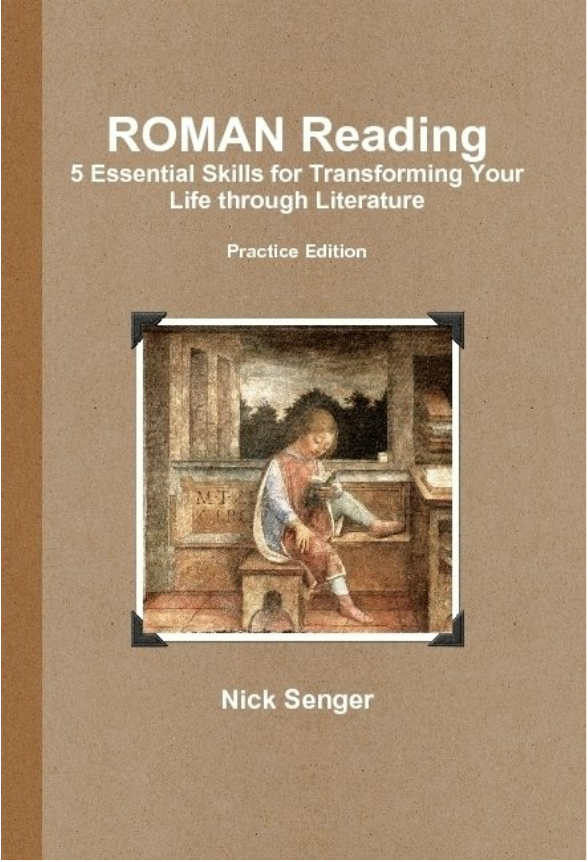
Use the ROMAN Reading Strategy to Promote your Summer Reading List
I love innovative reading strategies. Most religion teachers recognize early on that despite the fact that they are meant to teach theology, they spend a lot of their time teaching reading. Literature has historically been a key source of our faith and it is critical to the well-rounded Catholic religious education program. In Nick Senger’s…

Building Prayer Habits as a Teacher
Prayer is central to effective catechesis. If a teacher does not pray, how can she or he possibly expect to open students up to the grace of God? But we all know how busy our lives can get as teachers. Finding time to pray is difficult and it can be challenging to set up good…

Post-Confirmation Lesson Plan and Discussion
What do you teach after Confirmation is over (post-Confirmation sessions)? I recently shared a Confirmation lesson plan that focused on the deductive method of catechesis. The other approach to teaching ritual is the inductive method. This method begins with the ritual and and applies the actions to beliefs. In the case of Confirmation, this means…
Palm Sunday Video
Spirit Juice Studios and Outside da Box Productions have developed an incredible new video for Palm Sunday and Holy Week. If you teach teens or middle school students, this Palm Sunday video is spectacular. The video depicts two young men and their mother listening to the long Palm Sunday Gospel reading. One of the two…

Catholic Saints Birthday Project
Have you ever wondered which saints’ feast day is on your birthday? I bet your students haven’t taken the time to do the research. Give them the opportunity to find out as a Catholic saints birthday project. This could be a fun end-of-the-year project or a great way to start off the school year. One…
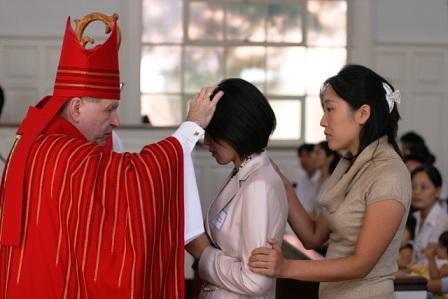
Rite of Confirmation Lesson Plan
According to the National Directory for Catechesis, there are two approaches to teaching ritual: the inductive method and the deductive method (NDC, 29). I wrote about these two approaches in a general way in a recent article published in the National Catholic Educational Association’s journal, Momemtum (February/March 2011, pp. 22-23). In the lesson plan below,…